Spatial parameters - rainfall, soil
pH
Physical paramaters - soil type, altitude (incident
angle of light, UV, day length)
Climatic parameters - temperature, cloudiness
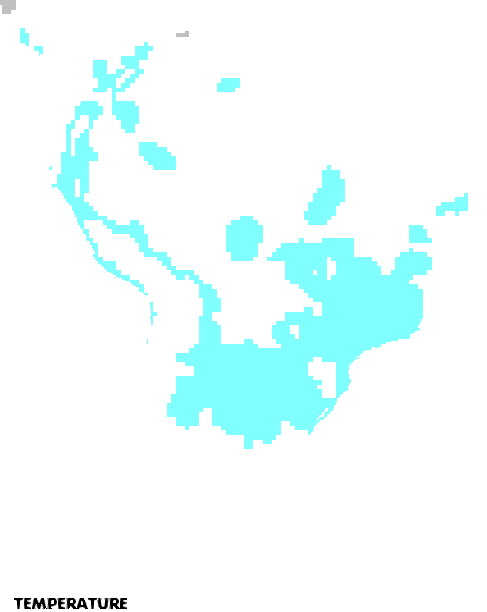
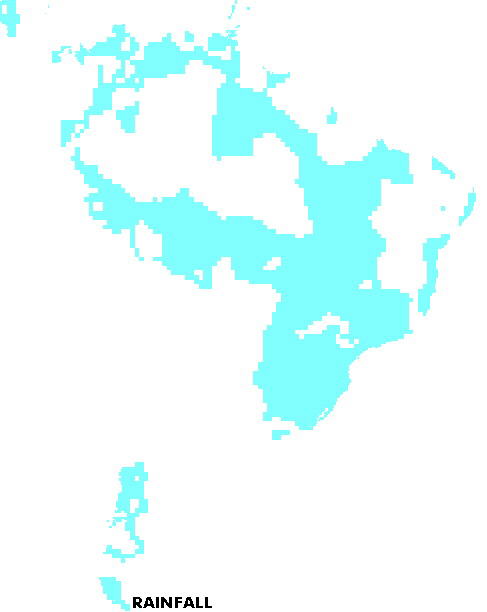
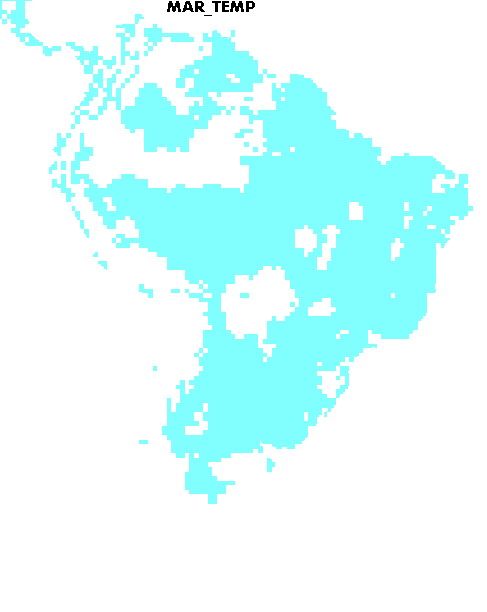
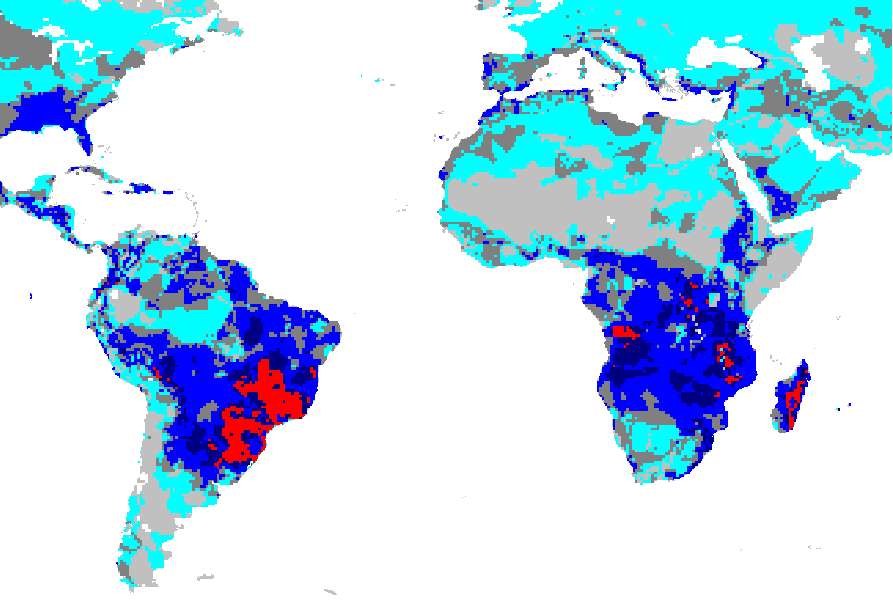
Climatic ranges for Agenium leptocladum.
Mean Annual Temperature
Mean Annual Rainfall
January Rainfall
January Cloudiness
June Cloudiness
March Mean Temperature
July Mean Temperature
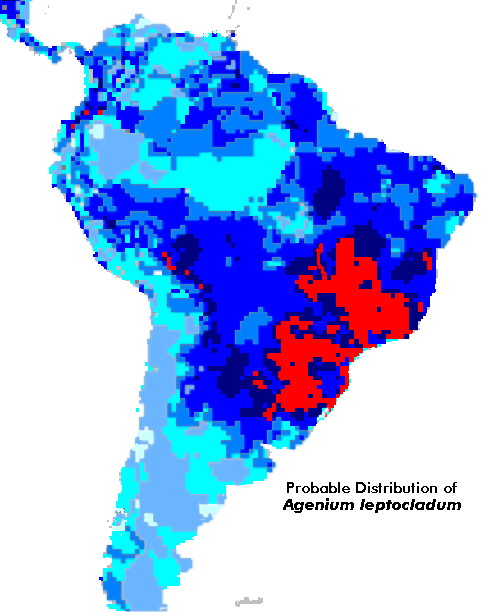
Composite of all of the above.
Predicted range of A. leptocladum
in the world
Temporal parameters - dispersal time and distance scales (chestnuts), migratory animals (parts of the range are temporally distributed), life stages with different niches (Saguaros). Habitat plates (Opuntia).
Interactive parameters - competition (carnivores), parasitism (exotics)
Complex parameters - specific combinations and CliMap vectors etc. (Pinus taeda soil moisture+temperature).
Hengeveld (1990) suggested a number of very seemingly esoteric climatic changes that may effect biological ranges (e.g. speed of diurnal warming) but provided no objective means for assessing their importance. Woodward (1987) discussed many of the mechanisms for these effects and models for testing them. In the example above we could provide an index of diurnal warming by integrating our data on albedo, cloudiness, temperature and temperature standard deviation to correlate with the ranges of our taxa.
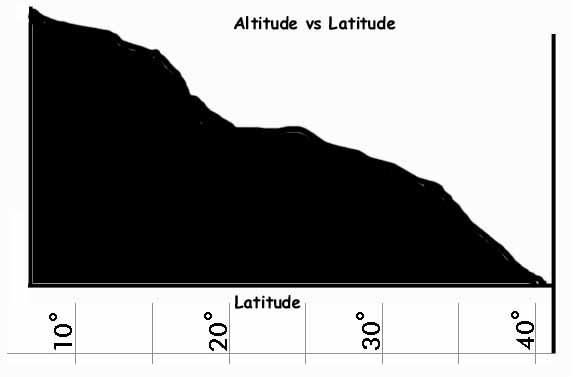
The edges of ranges are spatially ragged and patchy at several scales
often due to a combination of the above factors